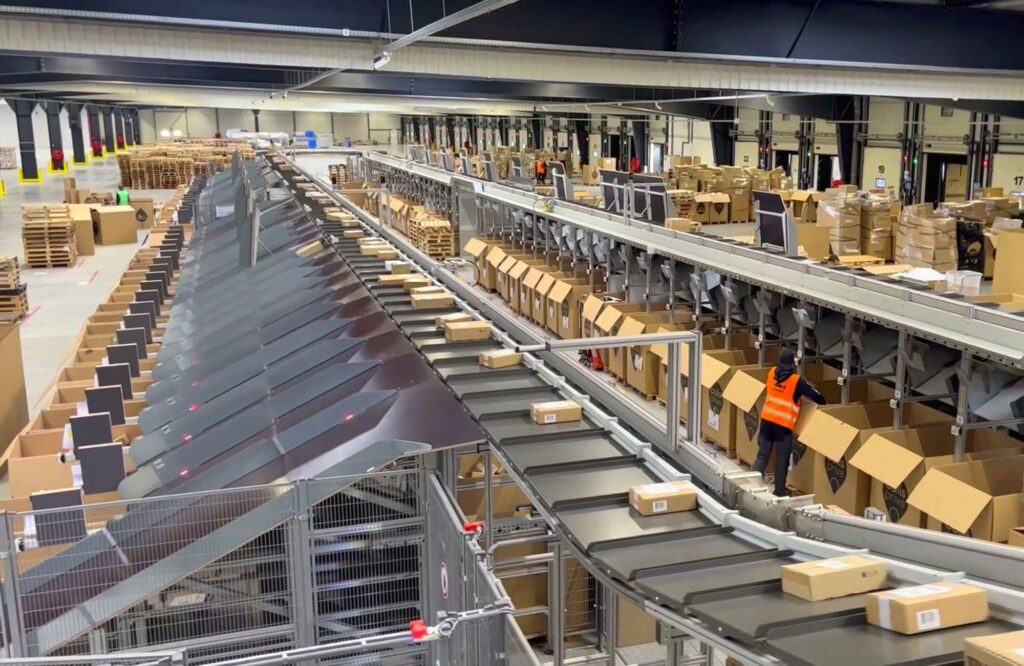
Colis Privé present at Webwinkel Vakdagen 2026

25–26 March 2026 – Jaarbeurs Utrecht (Netherlands)

Willebroek, March 2026 — Colis Privé announces its participation in the Webwinkel Vakdagen 2026, the leading trade fair for digital commerce and e‑commerce in Europe. The event will take place on 25 and 26 March 2026 at the Jaarbeurs in Utrecht and will bring together more than 14,000 professionals, 270 exhibitors and 200 conferences focused on the innovations transforming online commerce.

A must‑attend event for European e‑commerce

For more than 18 years, the Webwinkel Vakdagen has been the key event for retailers, e‑commerce companies, logistics players and digital experts. The fair covers the entire online commerce ecosystem: digital marketing, marketplaces, e‑commerce logistics, omnichannel, data and customer experience.

Colis Privé: a logistics partner for e‑commerce businesses

Active in Belgium and Luxembourg, Colis Privé supports e‑commerce companies and marketplaces in managing the last mile. The team will present its dedicated solutions: 24‑hour home delivery, a network of pickup points, logistics solutions for e‑commerce sites and transparent parcel tracking.

Colis Privé BeLux: accelerating expansion

Colis Privé BeLux, currently expanding rapidly, is ready to integrate flows from the Netherlands in order to ensure deliveries in Belgium, Luxembourg and France.
This increased capacity underscores the relevance of Colis Privé’s presence at the Webwinkel Vakdagen, at the heart of a rapidly evolving cross‑border market.

Present at the BeCom stand, alongside Alma and Baldwin

For this edition, Colis Privé is delighted to share the BeCom stand (https://becom.digital/nl/) with Alma and Baldwin.
This collective presence reflects a desire to unite complementary digital expertise — logistics, payment and e‑commerce solutions — to offer merchants an integrated and powerful vision for their future growth.

Key e‑commerce trends for 2026

The fair will highlight several important trends:

  • the growing integration of artificial intelligence in e‑commerce
  • advanced personalization of the customer experience
  • the expansion of omnichannel
  • the rise of flexible and sustainable logistics solutions

See you in Utrecht!

Colis Privé invites e‑commerce businesses, marketplaces and retail professionals to meet during the Webwinkel Vakdagen 2026.
📍 25 & 26 March 2026 – Jaarbeurs Utrecht

Why is last‑mile delivery an important challenge for e‑commerce companies?

In online retail, last‑mile delivery forms an essential step in the logistics chain for e‑commerce companies. It refers to the moment when parcels leave the distribution center and are transported to customers. This final phase of transport represents a significant share of the total costs while also playing a crucial role in customer satisfaction.

Although last‑mile logistics is often seen as a purely operational activity, in reality, it is a strategic challenge for e‑commerce companies. It directly influences service quality, delivery management, and how consumers perceive the company.

  1. The challenges of last-mile delivery

Last‑mile delivery is a complex logistical phase for e‑commerce companies. It combines transport, organizational and performance pressures, while also needing to meet the growing expectations of customers. This final link in the logistics chain brings several major challenges.

  • High costs 

Last‑mile delivery can account for up to 50% of total transport costs. The rise in individual deliveries, the planning of delivery rounds, and the high density of urban areas cause a strong increase in costs for businesses. Poor logistical optimization quickly leads to higher expenses.

  • Logistical complexity 

Last‑mile logistics relies on strict control of the flow of goods and efficient route planning. Without suitable solutions, organizing deliveries becomes difficult, leading to delays, unnecessary kilometres, and lower service quality.

  • Customer satisfaction 

For customers, last‑mile delivery is often the main touchpoint with the online retailer. Inaccurate delivery times, lack of flexibility or poor communication can negatively impact customer satisfaction and the overall customer experience.

  • Environmental impact 

Last‑mile transport has a considerable ecological footprint, mainly due to greenhouse gas emissions produced by delivery vehicles. This forces companies to rethink their logistical approach to reduce their CO₂ emissions.

  1. Solutions to optimize last-mile delivery 

To overcome the challenges of the last mile, companies have access to several solutions to improve their logistics and increase delivery performance.

  • Optimization of routes and delivery rounds

Route optimization and planning of delivery rounds help reduce the number of kilometres driven, improve transport efficiency, and keep delivery costs under control. Last‑mile management tools make it easier to organize deliveries and adapt to on‑the‑ground constraints.

  • Use of suitable vehicles 

Electric vehicles or alternative means of transport help reduce environmental impact. They are especially suitable for deliveries in urban areas and help lower greenhouse gas emissions.

  • Micro-distribution centers, pickup points, and lockers 

Micro‑distribution centers, pick‑up points and parcel lockers bring parcels closer to the customer. This logistical setup makes last‑mile delivery more efficient, lowers transport costs and speeds up processing.

  • Returns management 

Managing returns is an integral part of the delivery process. Clear and efficient return procedures optimize logistics flows, prevent additional costs and increase customer satisfaction.

  1. The strategic impact of last‑mile delivery for e‑commerce

Last-mile delivery has a direct impact on several key aspects of e-commerce: 

  • Customer satisfaction and loyalty 
  • Control over delivery and transportation costs 
  • Overall last-mile logistics performance 
  • The company’s image among consumers

By optimizing this phase, e‑commerce companies can better manage deliveries, increase logistics efficiency and strengthen their competitive position.

Last‑mile delivery is no longer just an operational step: it has become a strategic challenge for e‑commerce companies. Due to the combination of high costs, transport constraints, logistical challenges, customer expectations and environmental impact, this final link in the logistics chain requires tailored solutions.
With route optimization, efficient planning, electric vehicles, micro‑hubs and well‑designed return management, companies can turn last‑mile logistics into a true lever for performance and differentiation.

Essential guide to e-commerce logistics

Introduction

In an increasingly connected world, online shopping transcends borders and gives us access to an unprecedented variety of products from all four corners of the globe. But behind the apparent simplicity of a click lies a complex reality: the choice of shopping platform, the reliability of sellers, delivery times, hidden fees, and return guarantees directly influence your experience.

Today, shopping is truly just a click away, but it is not limited to filling a virtual basket. Consumers have several purchasing channels, each with its advantages, limitations, and precautions to take.

  • Official websites guarantee authenticity and reliable service, but prices may be higher and returns may be chargeable.
  • Marketplaces offer a vast selection and competitive prices, but require careful checking of sellers’ reputations.
  • Social networks offer original products and direct contact, but with higher risks and fewer guarantees.

In short, choosing the right channel is the first step to avoiding pitfalls and fully benefiting from global e-commerce. The aim of this guide is also to help you understand the logistics process that allows your purchases to travel from the other side of the world to your doorstep, so you can anticipate delivery times, costs, and formalities, and shop with confidence.

1. Why is international logistics crucial for you?

1.1 Accessing products from all over the world

Today, one click is enough to order an item from the United States, China, or the United Kingdom… as if it came from the shop around the corner.
Result: more choice and often more attractive prices.

But be careful: a .fr or .be website does not guarantee that the product is shipped from France or Belgium. Some platforms use a European domain… while shipping from the other side of the world.
Example: AliExpress has a .fr website, but many of its items are shipped directly from China.

💡 Good habits before buying:

  • Check the actual origin of the product
  • Check delivery times and conditions (carrier, place of dispatch)

If you cannot quickly find answers to these questions, be cautious and check the general terms and conditions or the return conditions, as these usually provide additional information.

1.2 Speed, costs, and transparency: the keys to a successful purchase

When making international purchases, several factors can influence your experience. Here is what to keep in mind:

1.2.1 Delivery times

  • From Europe: delivery within a few days
  • From Asia or America: several weeks, depending on the chosen transport method
  • Some services such as Amazon Prime offer delivery within 24 hours, or even the same day, even for products coming from far away (thanks to their local warehouses).

💡 Tip: prioritise sellers with a warehouse in Europe to avoid long waits and unpleasant surprises.

1.2.2 Shipping costs

  • Standard: cheaper, but slow
  • Express: fast, but more expensive
    If you order frequently, a subscription such as Amazon Prime can quickly become cost-effective.

1.2.3 VAT and customs duties

  • VAT: applied to all products coming from outside the EU
  • Customs duties: often applied to electronic products or high-value goods

💡 Tip: You can use practical tools such as Easyship or DutyCalculator to estimate fees before buying.

In summary
International logistics is what allows your product to travel from the other side of the world to your doorstep.
By knowing the right habits regarding origin, delivery times, and costs, you avoid unpleasant surprises and fully enjoy global e-commerce.

2. The role of logistics providers in the purchasing process

2.1 Shared responsibility

Some e‑commerce companies or carriers manage everything, from collection to delivery, including customs clearance. Others focus on specific stages and subcontract the rest to local providers.
Example: YUN Express up to Europe, then La Poste for final delivery.

2.2 Efficient local partners

Major players such as DHL, FedEx, or Asian actors like YUN Express often delegate the final delivery stage to local carriers (such as La Poste, bpost, or Colis Privé). This allows them to focus on the stages where they are most efficient while ensuring fast and flexible delivery.

Advantages:

  • Local partners know distribution areas well
  • This can speed up final delivery, especially in rural areas

Example: Purchase on Temu

Imagine you buy a product on Temu. Here are two scenarios:

Option 1: Temu manages everything
Temu handles the entire logistics process, including managing service providers. If an issue arises, it is their responsibility to resolve it.

Option 2: Temu delegates to a partner
Here, Temu chooses to entrust management to a provider such as YUN Express. YUN Express then handles all stages, and it is their responsibility to resolve any issues, such as a delivery delay.

2.3 Tracking and transparency: a key issue

The main challenge for consumers is coordination between these different players. Fortunately, more and more tracking services allow you to follow your parcel at each stage of its journey, offering better visibility over the entire process.

💡 Tip: Keep your tracking number safe and use a third‑party application to consolidate all your tracking information and gain visibility over the different parties involved (e.g. AfterShip or Parcelsapp).

3. Marketplaces and their role in logistics

Marketplaces such as Amazon, eBay, or AliExpress facilitate the connection between buyers and sellers, but they also play a key role in logistics.

3.1 Amazon and the FBA model

With this type of service, Amazon manages the entire logistics process for sellers. This includes:

  • Product storage: Sellers ship their goods directly to Amazon’s distribution centres, where they are stored until an order is placed.
  • Order preparation: Once an order is placed, Amazon handles packaging, labelling, and return management if necessary.
  • Final delivery: Amazon also manages shipping to customers using its transport network and ensures delivery deadlines are met.

This solution greatly simplifies the process for sellers, as they do not need to manage inventory, packaging, or delivery logistics themselves. It also allows customers to benefit from a faster, more reliable, and smoother shopping experience, particularly thanks to Prime delivery and simplified returns management.

3.2 Other marketplaces: AliExpress, eBay, etc.

Platforms such as AliExpress work with specialised partners, such as Cainiao, to manage shipping. This makes it possible to centralise operations and offer optimised delivery options for consumers.

Advantages of these logistics solutions:

  • Operational efficiency: Sellers no longer need to manage shipping themselves, allowing them to focus on developing their commercial activity.
  • Flexibility in carrier choice: Marketplaces select the most suitable carriers for each segment of the delivery journey, based on delivery times, costs, or geographical areas.
  • Reduced logistics costs: Thanks to their large volumes, these platforms can negotiate favourable rates with carriers, reducing delivery costs for consumers.

Some sellers may choose to use only part of the logistics services offered, for example by handling one stage of shipping themselves, in order to reduce overall delivery costs.

4. Choosing the best delivery option

4.1 Standard vs. express delivery

  • Standard delivery: Cheaper, but slower (around 5 to 21 days).
  • Express delivery: Faster (generally 24 to 72 hours), but more expensive.

Some companies, such as Amazon and AliExpress, offer ultra‑fast delivery thanks to local hubs in Europe.

4.2 Pickup point delivery

Pickup points are an economical and convenient option, particularly in France, Belgium, and Luxembourg. These collection points are often as fast as home delivery and allow you to save on shipping costs.

4.3 Shipping costs and taxes

Always check shipping costs and any applicable taxes (such as VAT or customs duties) before finalising your order. Some platforms provide an estimate of these costs at the time of purchase.

💡 Tip: prioritise websites that display “all‑inclusive” prices.

5. In case of delivery or return issues

5.1 Order tracking

Thanks to real‑time tracking, you can know where your parcel is at each stage of the process. In case of delay, contact the seller or carrier directly for more information.

5.2 Returns and refunds

  • Free returns: This can be more complicated for international purchases, but some platforms such as Amazon or AliExpress make returns easier.
  • Returns via pickup point: More and more websites offer returns via pickup points, which is often cheaper and more convenient.

5.3 Customs fees

When an order is placed outside the Schengen area, customs fees may apply upon delivery. These fees are often calculated based on the value of the purchase, the type of product, and the country of origin. In some cases, these fees can be quite high and unexpected. To avoid unpleasant surprises, services such as Easyship estimate these customs fees in advance and inform you of the exact amount to pay. This allows you to know the total cost of your order, including shipping and customs fees, even before the parcel is shipped. In this way, you can anticipate the costs and avoid unexpected charges upon receipt of your parcel.

6. A problem with your parcel? What should you do?

Sometimes, despite all efforts, problems arise with your order. Here are the most common situations and how to deal with them effectively.

6.1 The contents received are not what you ordered

  • First check your order form and the confirmation received by email to confirm the error.
  • Quickly contact the seller’s customer service, providing:
    • Your order number
    • A precise description of the problem
    • Photos of the product received
  • Request an exchange or a refund according to the seller’s policy.

6.2 Parcel damaged or opened on receipt

  • Take photos of the parcel immediately, even before opening it if possible.
  • Note all anomalies on the delivery slip at the time of receipt (in the presence of the delivery person).
  • Contact the carrier and the seller as soon as possible.

6.3 Delivery delay

  • Use the tracking number to check where your parcel is.
  • Contact the seller to request clarification on the delivery time.
  • In case of a long delay, you may consider a refund or a return, depending on the website’s policy.

6.4 Lost parcel

  • Immediately report the loss to the seller and the carrier.
  • Request an investigation and, if necessary, a refund or a replacement shipment.

6.5 In case of a dispute: who is responsible?

⚠️ Important for you as a consumer:

  • In the event of a problem with your order, the seller from whom you purchased the product is always responsible.
  • You have a sales contract with this seller, not directly with the carrier or the logistics platform.
  • The seller must handle the steps to resolve the issue, refund you, or exchange your product.
  • Carriers or service providers work for the seller, but generally have no legal responsibility towards you.
  • If the seller uses logistics partners, it is up to them to deal with those partners to recover their rights or compensation.

In summary
For any order, it is always with the seller that you must assert your rights. Keep all evidence (emails, photos, correspondence) and do not hesitate to insist with the seller to obtain a refund or replacement.

7. Practical tips to optimise your shopping experience

Here are a few tips to ensure your online purchases go smoothly, especially when ordering internationally:

  • Always check the origin of the product and the stated delivery times
  • Prioritise sellers offering a clear and complete tracking number
  • Carefully read return conditions and refund policies
  • Use secure payment methods (PayPal, credit card with buyer protection, etc.)
  • Consult customer reviews to check the seller’s reliability
  • Take out delivery insurance if you are ordering high‑value products
  • Track your parcel via a third‑party application to centralise information
Conclusion
Online shopping logistics may seem complex, but with the right information, it becomes much easier to navigate. By understanding delivery options, associated costs, and tracking tools, you will be better prepared to enjoy an optimal shopping experience without surprises.

A typical day in the life of a Colis Privé delivery driver

A key role in parcel delivery 

Parcel delivery is now a central element of the customer experience and of the performance of transport companies. At Colis Privé, the delivery drivers, working through a partner company, play an essential role in the quality of the delivery service offered to customers throughout Belgium and Luxembourg.

Each workday is structured around specific steps, combining parcel sorting, organization of the delivery route, transport, customer interaction and digital tracking of documents. The typical day of a Colis Privé driver illustrates the rigor and professionalism required to ensure reliable, efficient and customer‑focused delivery.

  1. Preparation,parcel sorting, and route planning 

The day begins with a crucial step: preparing and sorting the parcels. Upon arrival, the Colis Privé driver reviews the delivery route and the orders to be processed. The parcels are sorted precisely according to key criteria: geographic area, delivery sequence, weight and volume.

This sorting work optimizes the loading of the vehicle and ensures smooth operations throughout the route. The largest or heaviest parcels are strategically positioned to ensure safe handling and facilitate delivery at the customer’s home.

At the same time, the driver checks the delivery documents, which are now mostly digital. This early organization is essential for guaranteeing service reliability, reducing errors and offering a smooth customer experience from the first delivery onwards.

  1. Starting the delivery route

Once the sorting is complete and the vehicle loaded, the driver begins their delivery route. Each delivery is carried out according to the planned schedule, taking into account time constraints, known customer expectations and the specific features of each delivery option.

The driver’s mission is to transport the parcels to customers’ homes or to alternative delivery solutions provided by the company. Each delivery is validated through digital tools, ensuring precise tracking of orders and full traceability of the service.

This phase represents the core of the Colis Privé driver’s job. Punctuality, accuracy and compliance with procedures are essential to guarantee service quality.

  1. Handling Unexpected Situations and Delivery Solutions

The driver’s role requires strong adaptability. Despite an optimized organization, unexpected situations may occur: customer absence, difficult access to the home, or constraints related to parcel size or weight.

In such cases, the driver—often working with a high degree of autonomy—applies the delivery solutions prescribed by Colis Privé. These may include rescheduling the delivery, redirecting the parcel to a pickup point, or any other solution ensuring the order is safely handled.

This proactive approach directly contributes to customer satisfaction and to the overall quality of the delivery experience.

  1. Customer Relationship and Service Experience

The delivery driver is a key player in customer relations. They represent the company in the field and embody the quality of the services offered by Colis Privé. Each interaction influences the customer experience, whether it involves a successful delivery or the handling of a special situation.

Professionalism, courtesy and clear communication are essential to establishing long‑lasting trust. The driver does more than transport parcels: they actively contribute to the perception of the service and to customer loyalty.

  1. End of Route and Digital Processing of Documents

At the end of the day, the Colis Privé driver completes the delivery round. Information about completed deliveries, undelivered parcels and possible returns is entered into the company’s management systems.

Digital documents allow for precise tracking of orders, improved coordination with the team and continuous optimization of the organization. This step is essential for effectively preparing the next day’s deliveries.


An Organization Focused on Delivery and Customer Satisfaction

The typical day of a Colis Privé driver relies on a precise and demanding organization: parcel sorting, order preparation, transport, home delivery, handling unforeseen situations and digital processing of documents.

Thanks to a structured service offering, a committed team and adapted logistics solutions, Colis Privé ensures a high‑performing delivery experience every day, benefiting both customers and partners.

Singles’ Day, Black Friday, and Cyber Monday: Strategic Dates for Online Retailers

Every year, November marks the start of an intense period for e-commerce. With Singles’ Day (November 11), Black Friday, and Cyber Monday, the calendar brings together within just a few days three of the most anticipated events for consumers. These commercial operations have become essential: they kick off the holiday shopping season and represent a unique opportunity for online retailers.

Three events with different origins but global impact
Singles’ Day, which appeared in China in the 1990s as a celebration for singles, was transformed by Alibaba into the world’s largest shopping day. In 2022, sales exceeded $84 billion on the Tmall platform alone—a record that highlights the logistical and marketing power of the event.

Black Friday, born in the United States and held the day after Thanksgiving, symbolizes the official launch of Christmas shopping. It has firmly taken root in France through e-commerce, where spectacular discounts drive sales sharply upward. In 2023, online retailers recorded a +126% increase in orders compared to a typical week (source: Ecommercemag).

Finally, Cyber Monday emerged to extend Black Friday’s momentum online. Today, it is part of an extended commercial sequence often called “Cyber Week”, during which consumers take advantage of several days of discounts to finalize their online purchases.

Huge potential, but also challenges for online retailers
These key moments don’t happen by chance: to make the most of them, e-commerce players must plan ahead and prepare carefully. Consumers’ expectations are clear:

  • Products available, with optimal stock management to avoid shortages.
  • A seamless online experience: fast websites, bug-free checkout, secure payment.
  • Attractive and transparent offers, clearly highlighted.
  • Multiple delivery options: home delivery, pickup points, lockers, express shipping…
  • Reliable delivery promises, with deadlines met despite massive volumes.

Competition is particularly fierce during this period, and service often makes the difference. A consumer satisfied with their delivery is not only more likely to recommend but also to return outside of these peak events.

Colis Privé: A Logistics Partner to Secure Success 🚚
At Colis Privé, we support many online retailers in meeting these challenges and turning this period into both a commercial and logistical success. Our expertise relies on:

  • A dense, nationwide network covering the entire country.
  • Flexible delivery services (home, pickup point, locker, express).
  • High-performance digital tools for real-time tracking and notifications.
  • An organization tailored to seasonal peaks, capable of absorbing massive volume increases.

Thanks to this approach, Colis Privé helps brands keep their customer promises and turn these promotional events into real drivers of loyalty.

Learn more about our offers and services: Our e-commerce solutions – Colis Privé

CEVA Logistics Strengthens Last Mile Offering in France with Acquisition of MIPI by Colis Privé

Press Release

CEVA Logistics Strengthens Last Mile Offering in France with Acquisition of MIPI by Colis Privé

  • The acquisition of MIPI enhances Colis Privé Group’s last mile delivery capabilities,
  • MIPI founder Yasmine Iamarene is appointed CEO of Colis Privé Group while retaining her executive role at MIPI

Photos available: Colis Privé

Marseille, September 11, 2025 – CEVA Logistics, a global leader in third party logistics (3PL) and France’s top logistics provider, today announced the acquisition of French start-up MIPI by its subsidiary Colis Privé. This transaction, effective immediately, marks a key milestone in the Group’s strategy to reinforce its last mile delivery services in France.

Yasmine Iamarene, founder of MIPI, has been appointed Chief Executive Officer of Colis Privé Group. She will also continue to lead MIPI, now operating as a subsidiary of the Group.

A Comprehensive Offer Driven by Shared Values

Colis Privé is a major player in home and out of home parcel delivery in France and Belgium, offering fast delivery times of 24 to 48 hours. From parcel pick-up to final delivery, Colis Privé provides end to end solutions known for their reliability and high service performance. In 2024, the company delivered more than 90 million parcels, supported by 3,800 couriers, 5 hubs, 51 agencies, and 9,500 Colis Privé Stores. Its fleet includes 400 electric vehicles, enabling 21% of deliveries to be low carbon.

Founded in 2020, MIPI has grown rapidly in the urban delivery sector by offering an agile, high quality, and more sustainable service. The company achieved €9 million in revenue in 2024, driven by strong customer trust and dedicated teams.

With over 300 couriers and a delivery network focused on major urban centers such as Paris, Marseille, Lyon, Lille, and Bordeaux, MIPI stands out for its dual commitment to environmental and social impact. The company promotes its couriers as true brand ambassadors to customers.

MIPI has developed a last mile logistics model that is both efficient and responsible, breaking away from traditional practices. Its eco-friendly vehicle fleet and optimized route management contribute to a more sustainable approach to urban transport. The company boasts a workforce composed of 40% women, an exceptional figure in this sector. MIPI’s HR model is based on permanent contracts, ongoing training, and a strong focus on quality of life at work, a notable shift from the temporary employment often seen in the industry.

“Delivery is a vital part of the customer experience. With MIPI, Colis Privé Group strengthens its ability to offer a flexible, reliable service that cares for both the environment and its teams’ well-being,” said Frédéric Obala, Senior Vice President, E-commerce, CEVA Logistics.

“This acquisition is a tremendous opportunity to scale up our impact while reinforcing our shared strengths, proximity, quality, and responsibility. Colis Privé and MIPI are united by a common mission, to prove that high quality service, social responsibility, and ecological transition can go hand in hand in last mile delivery. MIPI will benefit from Colis Privé’s 30 years of experience, and together, we’ll continue to move forward with a shared ambition. I’m proud to lead this new chapter,” said Yasmine Iamarene, CEO of Colis Privé and founder of MIPI.

About CEVA Logistics

CEVA Logistics, a global leader in third party logistics (3PL), provides end to end supply chain solutions that connect people, products, and providers around the world. Headquartered in Marseille, CEVA Logistics offers a wide range of tailored services in contract logistics, air, ocean, ground, and finished vehicle transport. The company operates in 170 countries with nearly 110,000 employees across more than 1,500 sites. With revenues of $18.3 billion in 2024, CEVA Logistics is part of the CMA CGM Group, a global player in sea, land, air, and logistics solutions.

For more information, visit www.cevalogistics.com or contact: media@cevalogistics.com

Carbon footprint 2023

For the fourth consecutive year, Colis Privé has voluntarily conducted its carbon footprint assessment in collaboration with the company SAMI.

This assessment aims to measure our greenhouse gas emissions, reduce our impact on the environment and take action to protect our planet.

In mid-March, Colis Privé employees responded to a questionnaire on their professional travel habits. These anonymized questionnaires were then used by our partner SAMI to calculate a significant part of Colis Privé's carbon footprint, which will be published before the summer.

It is thanks to everyone's involvement that Colis Privé can achieve its goals of reducing its environmental impact.

Key events of Colis Privé of 2023

As the new year begins, we wanted to share with you the five key events of 2023 for Colis Privé!

Looking back at 2023:    

  • Colis Privé certified as a Great Place To Work® France
    The global benchmark for measuring employee experience has rated the participation rate of employees at 89.4%, and a trust index of 70% at Colis Privé.
  • Bernard de Guillebon becomes the new CEO of Colis Privé
    On 2 May, we welcomed Bernard de Guillebon as the new CEO at our Marseille headquarters. Since his arrival, he has made numerous visits to meet the teams on the ground at the Colis Privé agencies and hubs.
  • Opening of 2 new sites: Compans and Quincieux!
    The start of 2023 was exciting for the Colis Privé network teams with the opening of the Compans Hub and the Quincieux agency: modern, spacious and eco-friendly.
  • Colis Privé launched electric vehicles branded with the Colis Privé colours.
    For greener and more efficient delivery, Colis Privé deployed an electric fleet from the Tremblay and Quincieux agencies, which will expand this year to low-emission zones.
  • The Peak Period at Colis Privé
    The Peak 2023 was a real success for Colis Privé. In terms of volume, the figures were good with a record day on 20 December with 378,130 parcels for France! We can already congratulate the 3,465 delivery drivers. In BELUX, we reached the peak on 6 December with more than 70,000 parcels delivered. 

Thank you to all the Colis Privé teams for their commitment to making Colis Privé the preferred last-mile delivery choice.  For 2024, we are ready to face new challenges and share great experiences together!

Opening of the Compans Hub and the Quincieux Agency

This back-to-school season is full of new developments for Colis Privé. Two new eco-responsible sites are opening in the network. Both projects adhere to our environmental policy.

Compans

The 15,000 m2, warehouse, with 88 dock doors and 500 m2 of photovoltaic panels, replaces the Vemars site. With this new hub, Colis Privé is pushing the envelope on eco-responsibility and energy-saving, which are the real challenges of tomorrow. For this project, Colis Privé has filed a BREEAM certification dossier and aims for an ‘Excellent’ rating. The building has also received the SIMI Grand Prix for Logistics Real Estate. Colis Privé is proud to open this new-generation logistics hub with a particularly well-managed environmental footprint.

Quincieux

Located north of Lyon, the new 5,000 m², agency with 600 m2 offices includes 77 light vehicle loading docks and 8 heavy vehicle loading docks. This site will alleviate the Corbas agency while remaining close to the distribution sectors. Through its photovoltaic power station, Colis Privé aspires to achieve the “Very Good” BREEAM certification for the building to highlight its environmental performance.

Zero waste goal with Waste Pilot

Within its network, Colis Privé aims to reduce non-recoverable waste and increase its recycling rate.

To achieve this goal, Colis Privé pools its tools with CEVA Logistics using WastePilot. This waste management and monitoring software across all sites allows for a reduction in costs and environmental impact related to waste management. Supported by the consulting firm Particule, specialised in waste optimisation and reduction, Colis Privé is setting up new waste disposal organisations.

Installing a press reduces our cardboard waste into bales at our Compans site to achieve a 100% recycling rate. This reduction in volume optimises transportation rotations, thereby reducing greenhouse gas emissions associated with waste transport.